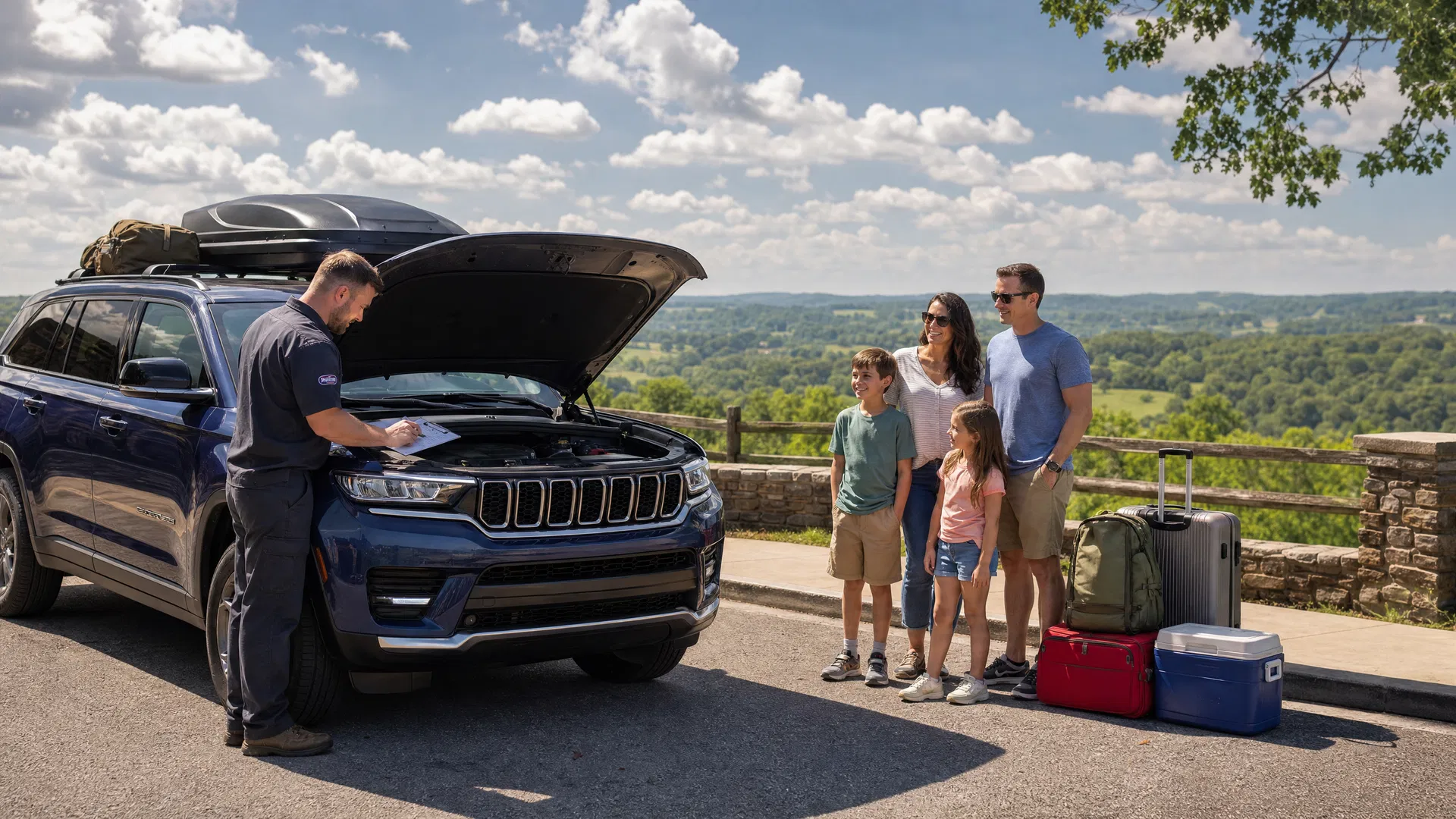
Summer is road trip season in Kentucky, and whether you're heading to the lake, driving down to Nashville, or loading up the family for a beach vacation, your vehicle is about to be asked to do a lot more than its usual daily commute. Highway miles in summer heat put different demands on your car than stop-and-go city driving, and the last thing you want is a breakdown 200 miles from home.
As ASE-certified technicians who see the aftermath of skipped maintenance every summer, here's what we wish every driver would check before a long trip — and why each item matters.
Tires: Pressure, Tread, and the Spare
Tire blowouts spike in summer because heat increases tire pressure, and underinflated or worn tires are especially vulnerable. Check your tire pressure when the tires are cold (before driving), and set them to the manufacturer's recommended PSI — not the maximum listed on the tire sidewall. Inspect the tread depth with the penny test: insert a penny head-first into the tread groove. If you can see all of Lincoln's head, the tread is too worn for safe highway driving.
Don't forget the spare tire. Many drivers haven't looked at their spare in years, only to discover it's flat when they need it most. Check the pressure and make sure the jack and lug wrench are in the vehicle and in working condition.
Fluids: The Lifeblood of Your Vehicle
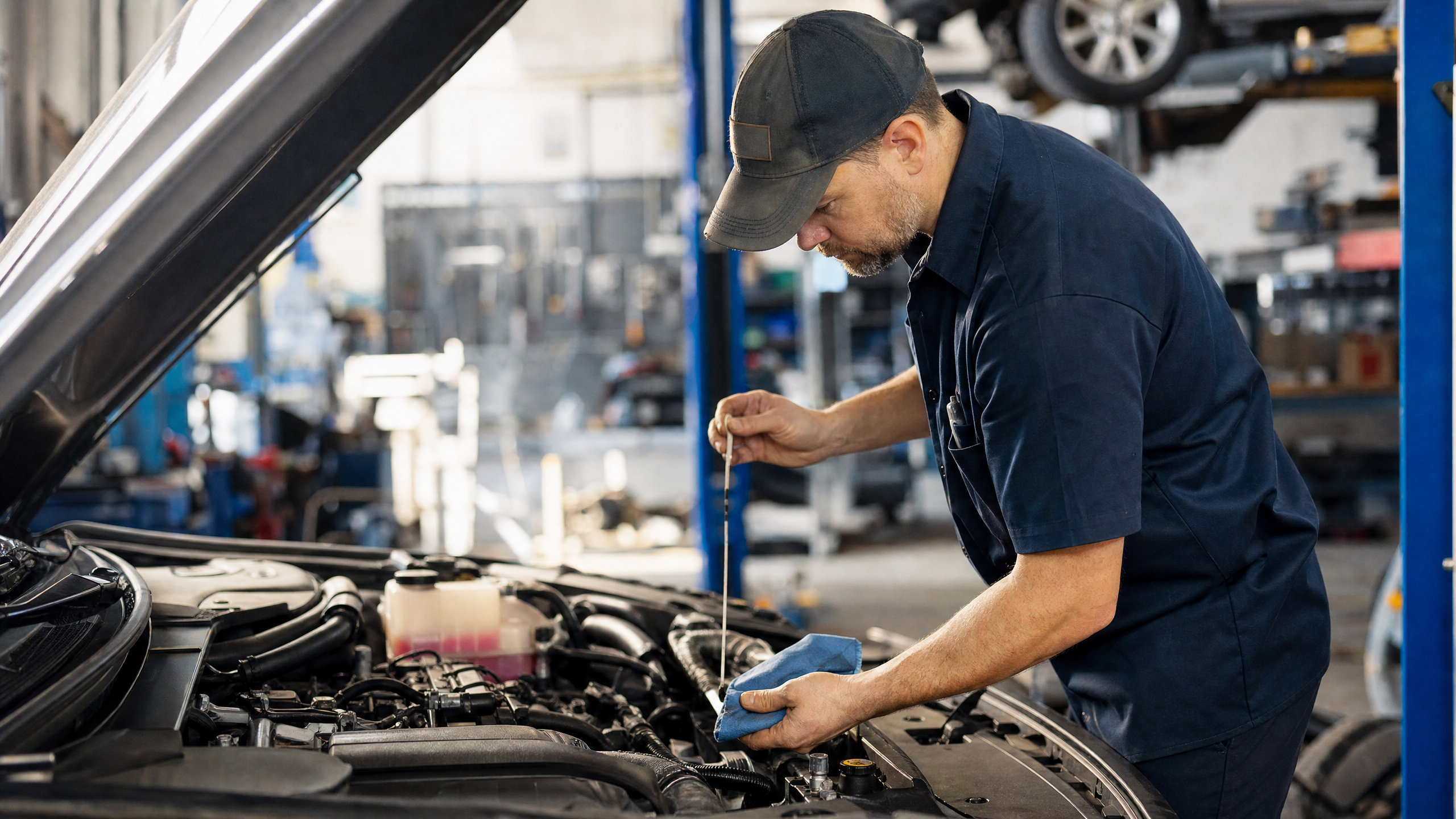
Engine oil, coolant, transmission fluid, brake fluid, and power steering fluid all play critical roles, and summer heat accelerates their breakdown. If you're due for an oil change within the next 1,000 miles, get it done before the trip — not after. Check the coolant level and condition; old or low coolant is the leading cause of summer overheating. Top off the windshield washer fluid too — summer bugs and road grime can coat your windshield quickly on the highway.
Cooling System: Your Engine's Best Friend in Summer
Your cooling system works hardest during summer highway driving, especially if you're towing, climbing hills, or sitting in traffic with the AC running. A cooling system inspection checks the radiator, hoses, water pump, thermostat, and coolant condition. Rubber hoses can deteriorate from the inside out, so they may look fine on the outside but be ready to fail under pressure. A burst hose on the interstate means an immediate overheat and a tow truck call.
Brakes: Stopping Power When It Counts
Summer driving often means mountain roads, heavy traffic, and sudden stops. Have your brake pads, rotors, and fluid inspected before a long trip. Thin brake pads can overheat and fade during extended downhill driving, reducing your stopping power exactly when you need it most. If you hear squealing, grinding, or feel pulsation when braking, get them checked immediately.
Battery: Heat Is the Silent Killer
Most people associate battery failures with winter, but heat actually does more long-term damage to batteries than cold. Summer temperatures accelerate the chemical reaction inside the battery, causing it to degrade faster. A battery that's more than three years old should be tested before a road trip. A quick load test can tell you whether it has enough reserve capacity to handle the demands of highway driving with the AC, GPS, and phone chargers all running.
AC System: Comfort and Safety
A working AC system isn't just about comfort — it reduces driver fatigue and keeps everyone in the vehicle alert and focused. If your AC is blowing warm or has a strange smell, get it inspected before the trip. A refrigerant recharge is a quick fix, but a failing compressor needs more time and planning.
Belts and Hoses: The Overlooked Essentials
Serpentine belts and radiator hoses are rubber components that degrade with heat and age. A snapped serpentine belt disables your alternator, power steering, and AC all at once. A cracked or swollen hose can burst without warning. These components are inexpensive to replace preventively but can cause major headaches — and expensive tow bills — if they fail on the road.
Emergency Kit: Hope for the Best, Prepare for the Rest
Even with perfect maintenance, things can happen on the road. Pack a basic emergency kit with jumper cables, a flashlight, a first aid kit, bottled water, a phone charger, and basic tools. A reflective triangle or road flares are smart additions if you're driving at night or on rural highways.
Final Thoughts
A summer road trip should be about making memories, not making calls to a tow truck. Most roadside breakdowns are preventable with a simple pre-trip inspection. At Certified Auto Service in Crestwood, we offer comprehensive pre-trip inspections that cover all the items above — and more. We'll give your vehicle a thorough checkup so you can hit the road with confidence. Schedule your pre-trip inspection today and enjoy the drive.
Need Help With Your Vehicle?
Our ASE-certified technicians are here to help. Schedule your appointment today.
Reserve Your Spot